Chapter 1
The Fire Element governs connection, expression, and joy, guiding us to relate with warmth, presence, and emotional clarity.
In the body, this energy flows through the Heart, Small Intestine, Pericardium, and Triple Burner Meridians, influencing our capacity for emotional regulation, healthy boundaries, and meaningful connection.
When balanced, Fire energy allows us to express ourselves authentically, connect with others from the heart, and experience inner calm even in the midst of intensity.
When imbalanced—either depleted or overactive—we may feel anxious, scattered, emotionally reactive, or burned out.
By working with these meridians through movement and awareness, we can support healthy circulation—of blood, energy, and emotion—and reconnect with a grounded, open-hearted state.
Below, explore the pathways of the Fire element meridians, their relationships with the chest, shoulders, arms, and upper back, and ways to regulate and balance this energy through breath, movement, and attunement.
Pro tip: Use your hands to gently trace the channels along your arms and chest. What do you feel? Can you sense areas of heat, numbness, or sensation? Imagine these pathways as internal rivers—how would you help them flow without flooding or drying out?
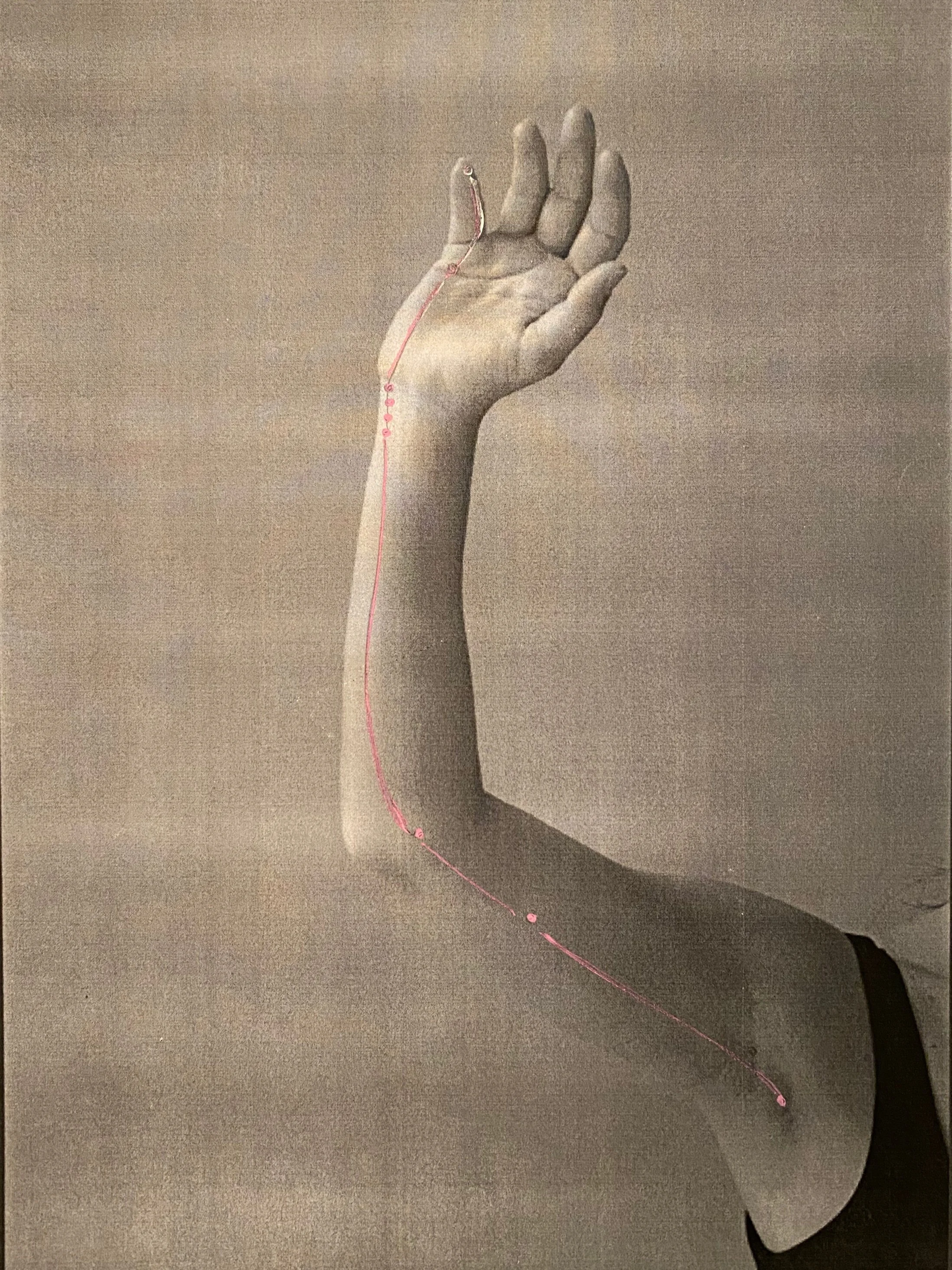
HEART MERIDIAN
Heart Meridian – Connection & Authentic Expression
Muscles: Subscapularis, pectoralis major, biceps (short head), inner arm muscles
Function: Governs emotional presence, joy, and heart-centered communication. Supports circulation—of blood, emotions, and expression. Helps us stay open, grounded, and authentic in connection with others.
Imbalances: May show up as chest or armpit tension, emotional guardedness, overexposure, or difficulty expressing your truth. You may feel overexcited, ungrounded, or disconnected from a sense of joy and trust in relationship.
Stretch Focus: Child’s Pose Pullbacks to support energetic boundaries and reconnect to your own inner truth.
PERICARDIUM MERIDIAN

Pericardium Meridian – Boundaries & Emotional Safety
Muscles: Pectoralis major & minor, biceps, wrist flexors, palmar fascia
Function: Acts as the emotional gatekeeper for the heart. Helps us create safe emotional boundaries while still allowing authentic connection. Supports the ability to give and receive touch, care, and intimacy without overwhelm.
Imbalances: Tightness in the chest, arms, or hands may reflect difficulty setting boundaries or overextending emotionally. You may feel drained by relationships or reluctant to open up.
Stretch Focus: Reverse Plank Rolls, to restore healthy emotional flow and heart protection.

SMALL INTESTINE MERIDIAN
Small Intestine Meridian – Clarity & Discernment
Muscles: Rotator cuff (especially infraspinatus), rhomboids, posterior deltoid, triceps, upper trapezius
Function: Helps us separate what’s nourishing from what needs to be released—both physically (digestion) and emotionally (discernment in relationships and communication).
Imbalances: Tension or imbalance may show up as shoulder discomfort, indecision, overwhelm, or taking on what isn’t ours.
Stretch Focus: Forearm Teeter Totters to support emotional clarity, boundaries, and healthy release of what no longer serves.
TRIPLE-BURNER MERIDIAN
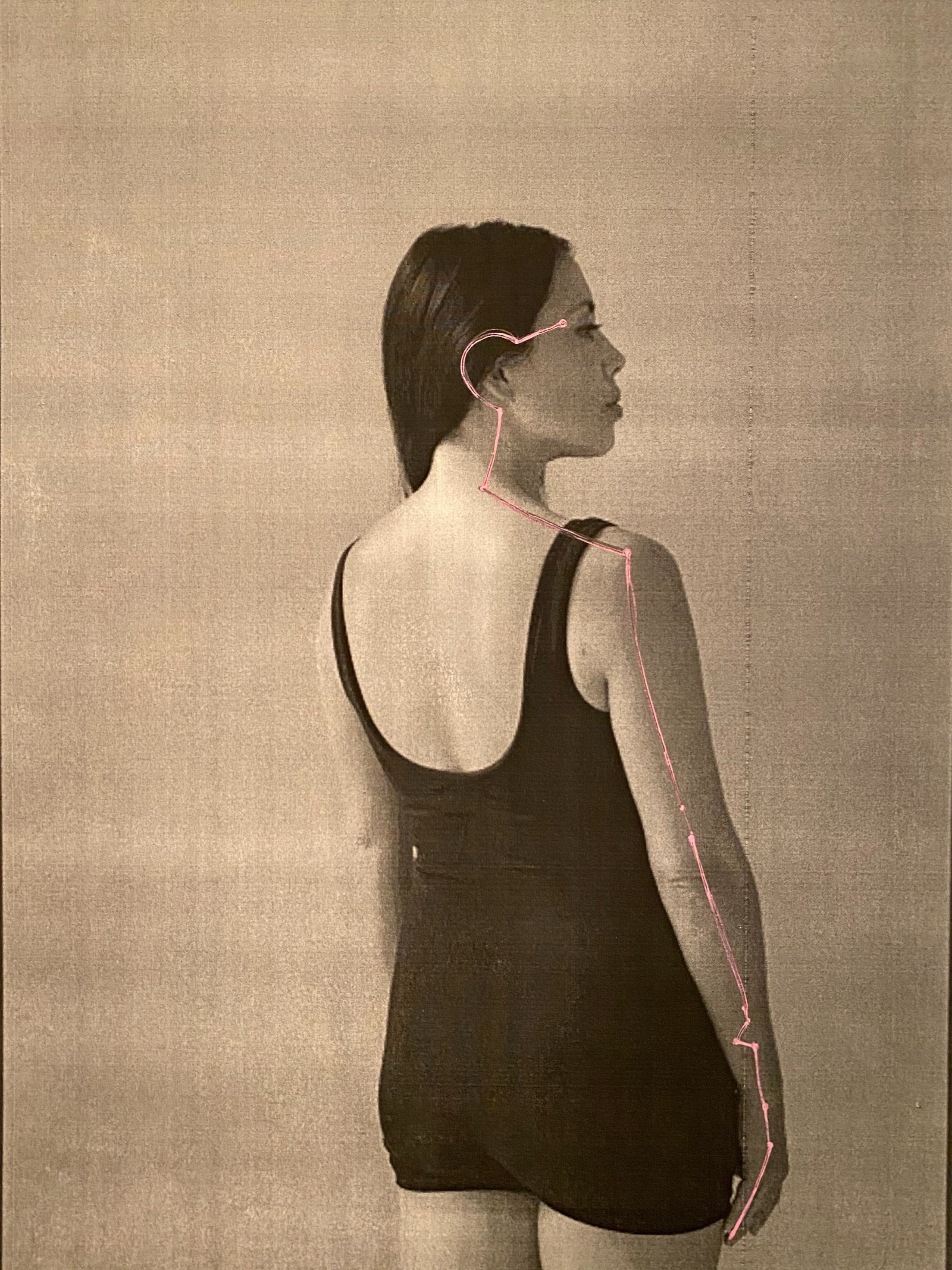
Triple Burner Meridian – Integration & Regulation
Muscles: Lateral triceps, deltoids, levator scapulae, SCM (sternocleidomastoid), temporalis, diaphragm region (functionally), serratus anterior
Function: Regulates and harmonizes the body’s three “burners” or energetic centers—upper (respiration), middle (digestion), and lower (elimination + reproduction). Helps coordinate communication between systems and maintains equilibrium under pressure.
Imbalances: Tension may show up in the neck, jaw, or side of the torso. Emotionally, you might feel dysregulated, scattered, or as though your systems aren’t syncing up—too much in the head, not enough groundedness.
Stretch Focus: Forearm Pullbacks to release tension along the lateral lines of the body and support whole-system coherence.