Your Liver In Spring

Some prompts, some history, and an invitation to notice what's shifting.
The Liver.
Before you read any further, pause for a moment.
What are your initial associations with the liver?
Not what you've studied, not what you think you should know. Just…what comes up?
Write down two or three words. I'll wait.
Here were mine:
Detox
Alcohol
Prometheus
Lily-livered
That last one sent me down a rabbit hole.
Lily-livered first shows up in 1605, meaning "cowardly." Medieval physiologists believed the liver was responsible for courage — the more blood in the liver, the more courage. A lily-white liver meant not a drop of blood, and therefore not a drop of courage. It's pretty catchy to say, which is probably why I remembered it, but didn’t really know the origins. Say it three times fast: Lily-livered. Lily-livered. Lily-livered. Much catchier than "white-livered."
But the liver's cultural significance goes deeper than English idioms. The Mesopotamians believed it was the seat of the soul. In Akkadian, the word for liver — kabattu — was synonymous with "heavy" or "weighty," making the organ the center of one's being and emotions.
And then there's Prometheus — punished for sharing fire with humans, bound to a rock while an eagle devoured his liver each day. Each night, it grew back. The ancient Greeks chose the right organ for the myth. The liver is the only internal organ that can regenerate itself.
I remember my brother-in-law, an MD, telling me about this and how it stuck with him in med school. The ancient Greeks, somehow knowing something special about the liver long before modern science confirmed it.
Prompt: Does any of this cultural history resonate with your own sense of the liver? Does the idea of the liver as a seat of courage, soul, or emotional weight feel surprising or maybe familiar?
The Western View
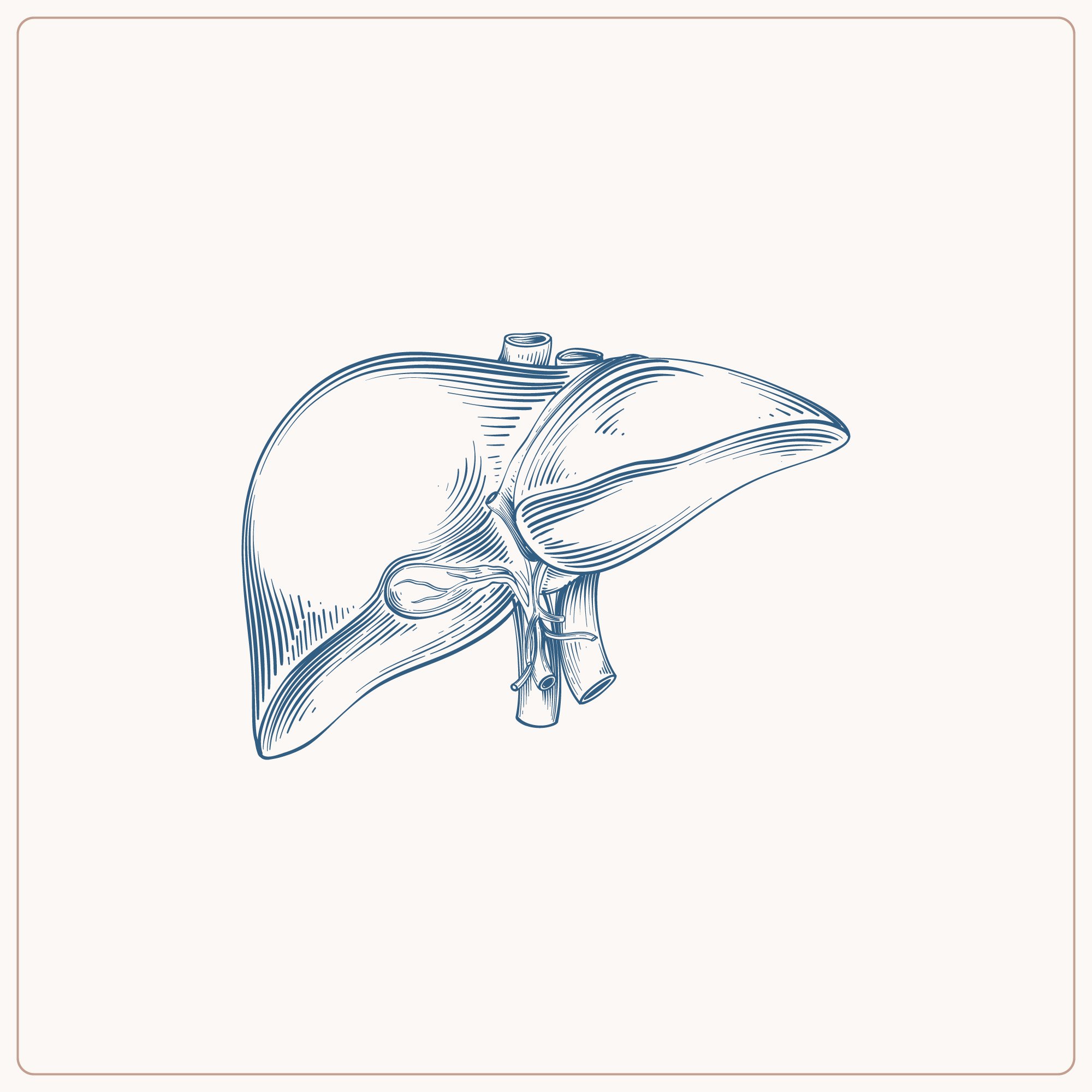
From a western medical perspective, the liver is the body's largest internal organ.
From A Western View, The Liver:
Produces bile to help break down food
Stores nutrients and vitamins
Filters toxins from the blood
Fights infections and disease
Processes histamines — which becomes especially relevant in spring, when all those blooming flowers flood the air with new allergens
It is, in short, an organ of processing. Everything passes through it.
Prompt: Sit with that word for a moment: processing. How do you usually process your experiences? Emotions, decisions, digestion. What does processing feel like in your body?
The Eastern View
As I've learned more about Chinese medicine, the liver has become more meaningful to me and more intuitive.
In Traditional Chinese Medicine, the Liver (capitalized here to distinguish the energetic system from the physical organ) is associated with the Wood element and is naturally more active in spring. This may relate to the shift in light, the surge of new growth, and — practically speaking— the increase in histamines from spring blooms that the liver must process.
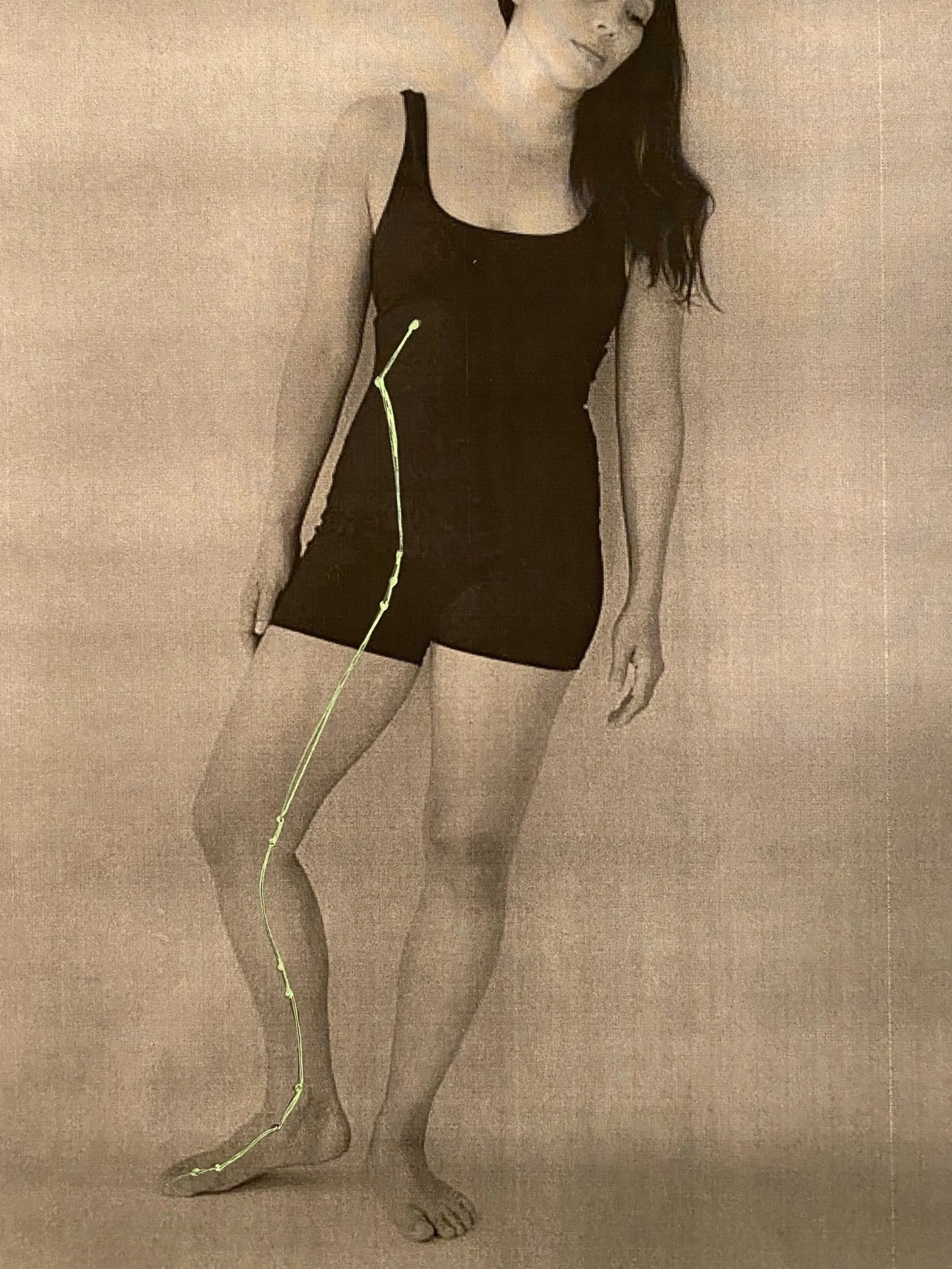
The Liver meridian runs from your inner foot, up between your first and second toes, along your inner thighs, and then out along the sides of your torso. On the right side, the meridian travels internally to connect with the liver organ and gallbladder. On the left, it follows a mirror path — classical texts describe the internal pathway as bilateral, running the same route on both sides. Though there's no liver organ on the left to connect to, the pathway continues through the diaphragm, throat, and up to the eyes and crown of the head. If you think of fascia as continuous (which it is) that connection doesn't need an organ as its destination. The pathway itself is the connection.
The Liver has a movement to it. I imagine it as excitable, sometimes overpowering the other yin organs. Because of its connection via blood flow to every other organ, it's sometimes called The General. It commands, directs, and mobilizes.
It is the Yin to the Gallbladder's Yang—its counterpart that I'll explore with you next week.
The Liver also has a major role in processing our emotional states, especially stress, anger, and frustration. When the Liver is in harmony, there's a sense of smooth flow — creativity, decisiveness, vision.
When it's in disharmony, you might notice:
Wind imbalance — gas, burping, a sense of things moving erratically
Fire imbalance — anger, irritability, feeling heated or reactive
Eye conditions — the Liver opens to the eyes in TCM, so blurry vision, dry eyes, or eye strain can signal Liver disharmony
Prompt: Without judgment, check in. Have you noticed any of these showing up lately? Digestive irregularity? A shorter fuse than usual? Eye strain or tension? Could be clues from your body!
Experiential Research: Notice What's Shifting
Here's where I'd love for you to become your own researcher. The following observations are associated with the Wood element, springtime, and the Liver. See if any feel intuitive or resonant for you over the coming days:
Color. Notice the bright, fresh green that's showing up in the landscape. How do you feel when you see that particular shade of green? Does it do something to your energy?
Breath. What does it feel like to take a full breath on a spring morning? Now contrast that — recall the feeling of breathing in on a crisp winter day, or in the thick warmth of summer. Is there a difference in how your body receives the air?
Cravings. Have yours changed as the season has shifted? Are you drawn to different flavors or foods? (Interesting note: citrus fruits are considered supportive for the liver. They stimulate liver enzymes that help filter and remove toxins, and their antioxidants reduce inflammation and protect liver cells from damage. Has your body been asking for citrus?)
Urges. Have you felt any previously dormant impulses surfacing? A desire to clean or organize? New goals crystallizing? A surge of energy to move your body? That's Wood element energy — the same force that pushes a green shoot through frozen ground.
Prompt: Pick one of these four — color, breath, cravings, or urges — and pay close attention to it for the next three days. You don't need to do anything with what you notice. Just notice.
Try This Point: Liver 3 (Tài Chōng)
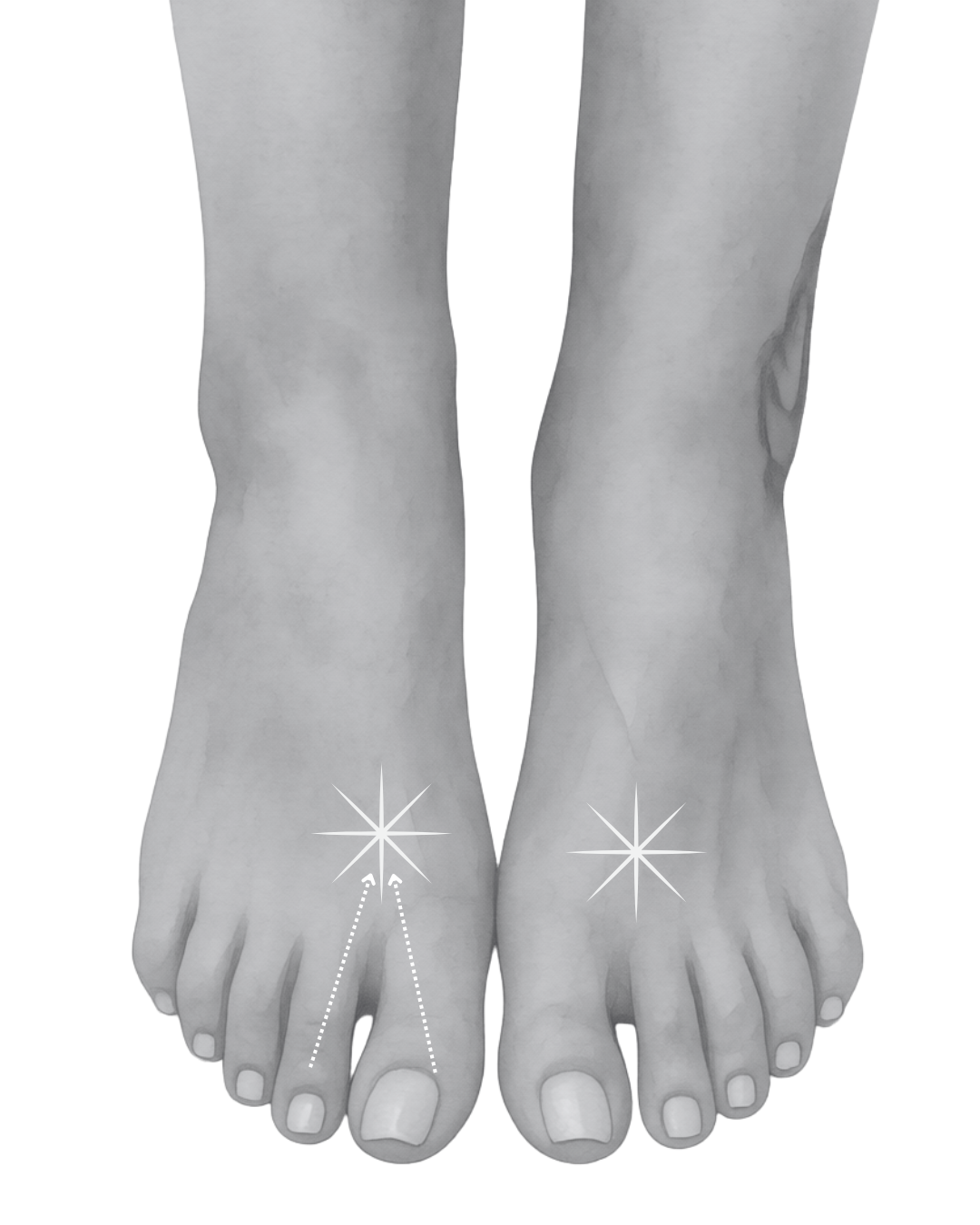
Liver 3 is one of my favorite acupressure points. It's also known as a master point, meaning it has broad, powerful effects across the body. It's used for stress, headaches, irritability, menstrual pain, digestive issues, and emotional stagnation. Think of it as a release valve for The General.
How to find it:
Place your finger on the top of your foot in the webbing between your big toe and second toe. Now slide your finger slowly up toward your ankle, along the groove between the two metatarsal bones. About one to two inches up, you'll feel a tender dip — a small depression where the bones begin to converge. That's Liver 3.
How to use it:
Press firmly with your thumb or fingertip. It will likely be tender. That's normal.
Hold steady pressure, or make small circles.
Stay here for 1–2 minutes on each foot.
While you press, take slow, full breaths. Let your exhale be longer than your inhale.
Prompt: As you hold the point, notice what you notice. Does the tenderness shift? Do you feel anything elsewhere in the body — your hips, your sides, your jaw? Does a breath come more easily? There's no right answer. Just information.
Go Deeper
The Wood Element Mini Course is now available inside The Listening Movement membership. If this newsletter sparked your curiosity, the course will take you further — into the meridians, the movements, and the seasonal practices that help you work with this energy rather than against it.
[Explore the Wood Element Mini Course →]
Not a member yet? You can try the full membership free for 30 days with the code: TLMONEMONTH
One last prompt: After reading all of this — go back to the two or three words you wrote down at the very beginning. Do they still feel like your primary associations? Has anything shifted, even slightly?
That shift is the practice.